Future Crime-Solvers Visit the NYPD Police Academy
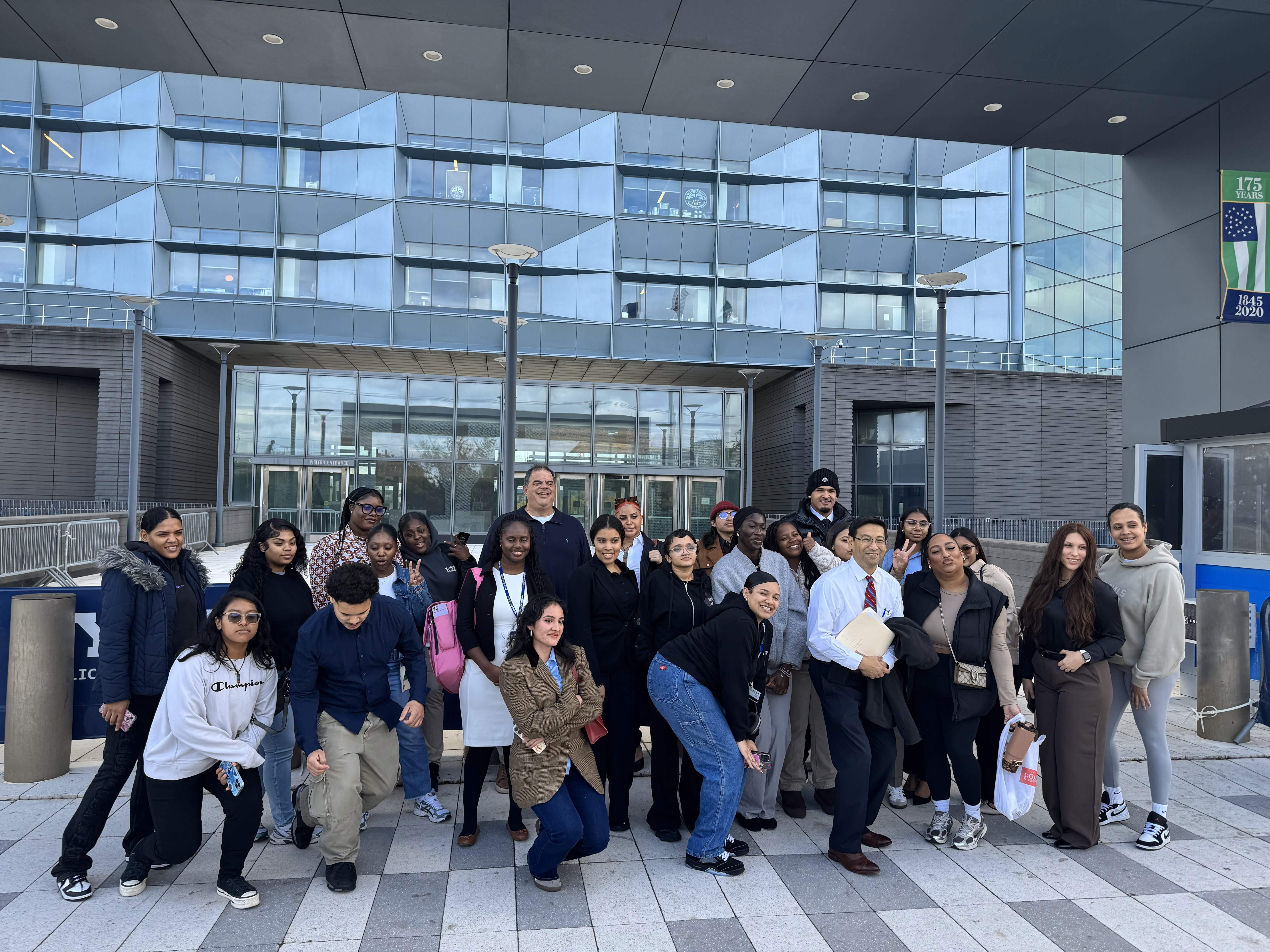
Students in the School of Criminal and Social Justice (SCSJ) gained an invaluable, real-world perspective on training to become an officer with the NYPD during a visit this fall to the New York City Police Department (NYPD) Police Academy.
During this impressive and exciting visit, students got a firsthand look at the academic rigor, physical training, and professional expectations that shape future NYPD officers at the Academy’s state-of-the-art College Point, Queens campus. Experiences like this are a hallmark of SCSJ’s commitment to bridging classroom learning with practical, on-the-ground exposure -- an essential combination for students preparing to enter criminal justice fields.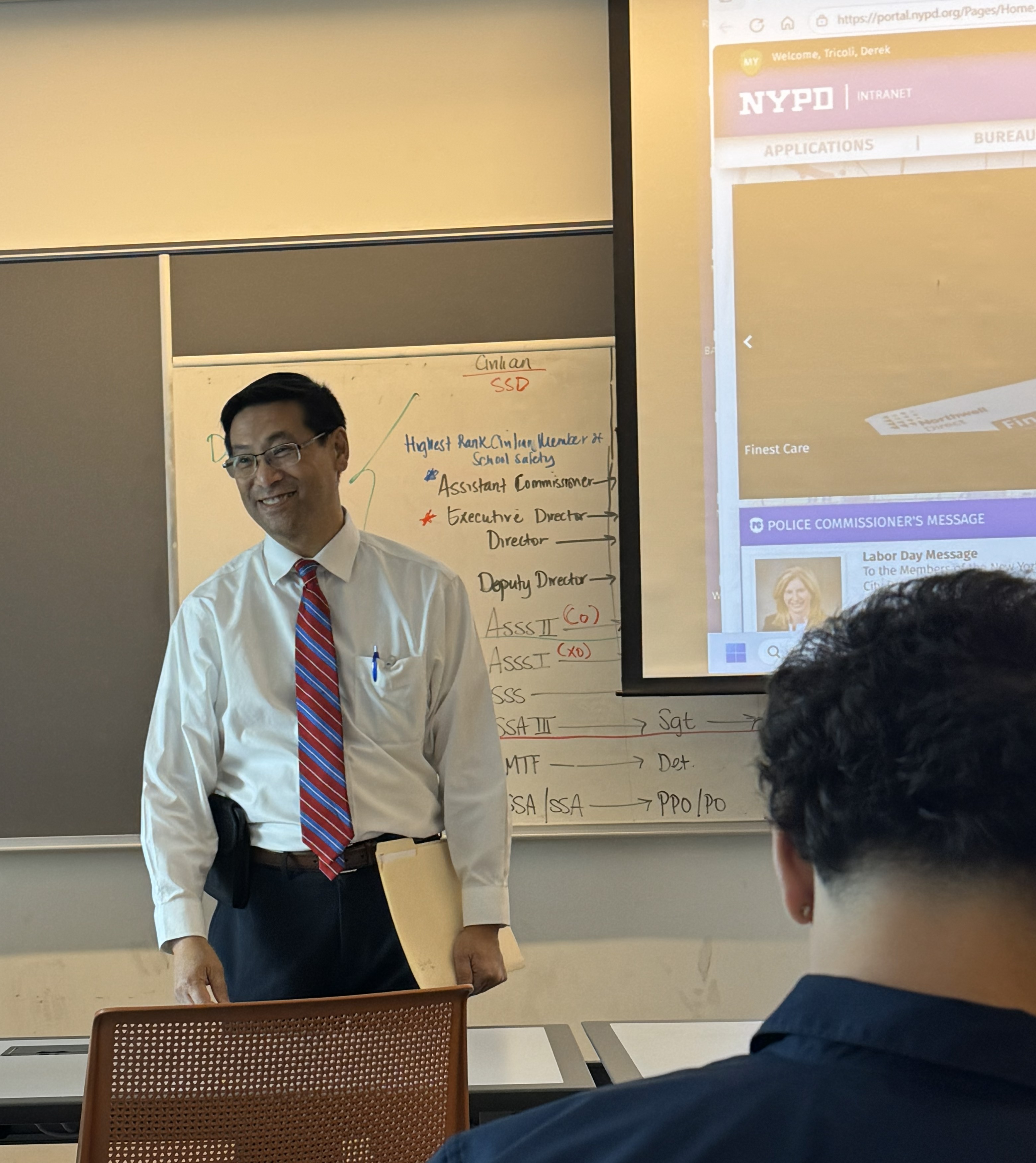
The Academy’s expansive training facility features modern classrooms, a full gymnasium and indoor track, and a comprehensive “tactical village” that immerses cadets in realistic, scenario-based exercises. In lifelike environments that replicate a precinct station house, multi-family residence, grocery store, subway car and platform, and more, cadets learn to translate textbook knowledge into split-second decision-making and community-centered practice.
SCSJ student Marina Rosario described the experience as “incredible.”
“I left feeling truly encouraged and inspired. Hearing about the training, discipline, and dedication it takes to become an NYPD officer made me even more determined to achieve my goal of joining the department one day,” she said.
Rosario expressed gratitude to SCSJ Associate Dean Dr. Paul Lichtbraun and to Professor George Chin, both of whom honorably served the NYPD earlier in their careers, “for making this opportunity possible and for guiding us throughout the visit.”
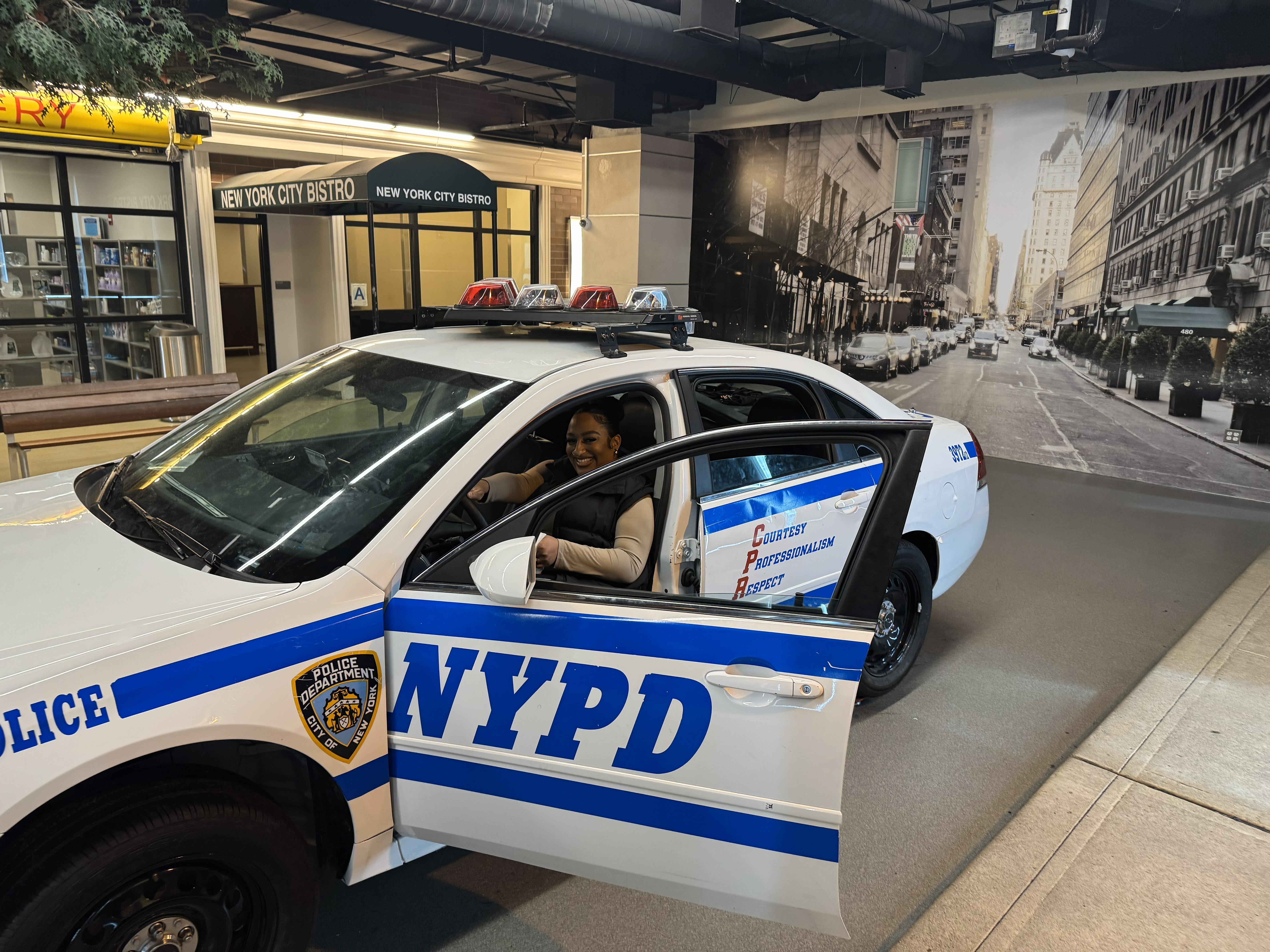
“The experience gave me great motivation and a deeper appreciation for the work that goes into serving and protecting our city,” she added. “It was truly an unforgettable experience.”
The visit is one of many experiential learning opportunities offered through the School of Criminal and Social Justice, which integrates hands-on experiences with academic study to prepare students for impactful careers in law enforcement, corrections, and public service. By stepping beyond the classroom and into real-world professional environments, SCSJ students deepen their understanding, strengthen their skills, and build the confidence essential for success in the field.