A Career in Crisis Response, Reimagined in the Classroom
Professor Keith Singer’s path to teaching our new Emergency and Disaster Management courses didn’t begin in academia. It started on the streets of Manhattan.
As an NYPD patrol officer, Singer’s career evolved over the years, taking him from Manhattan to various neighborhoods in Brooklyn, and eventually to the Bronx, where he worked in housing. After earning a promotion to lieutenant, he was assigned to the Transit Police unit, where he covered a massive district that began around 14th Street and ran all the way up to 126th Street.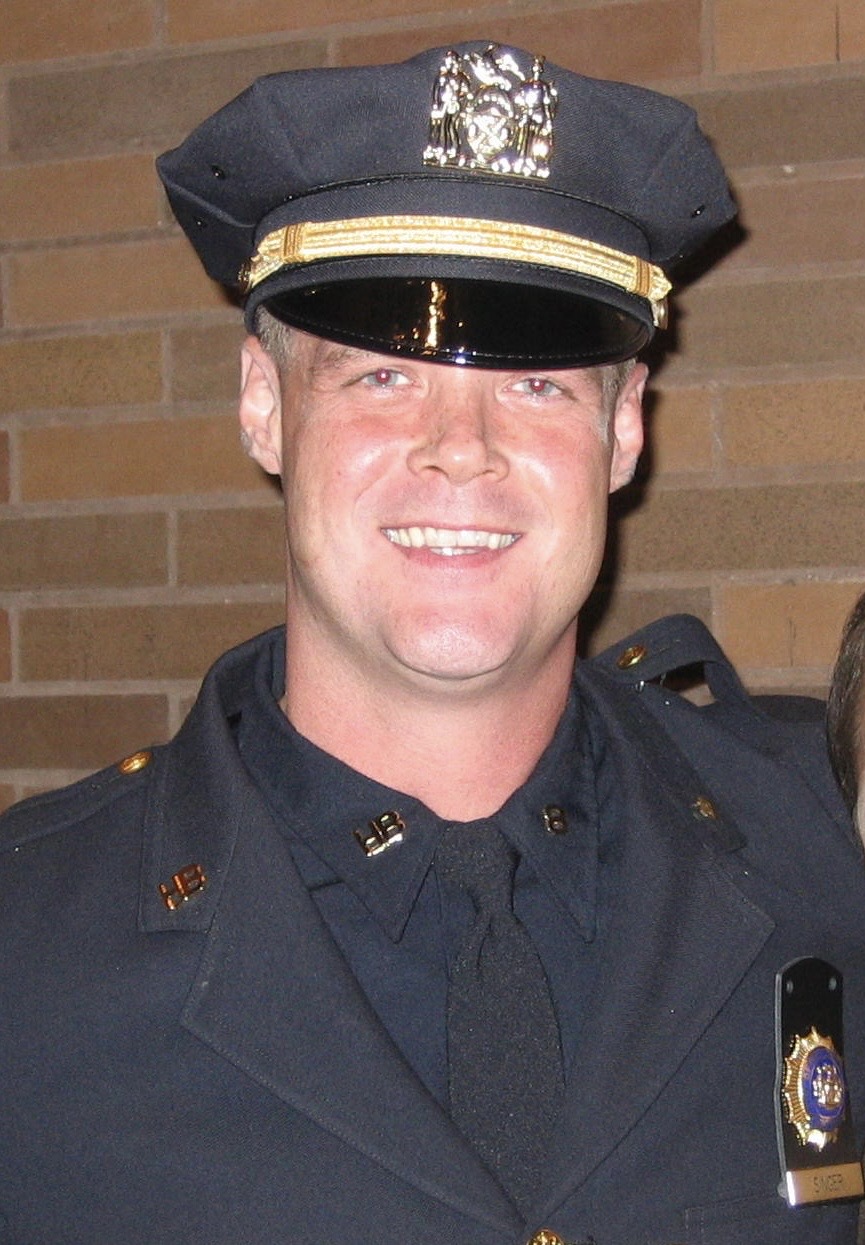
The chief of Transit at the time liked the way he handled his work and asked him to step into a critical role: commanding officer of operations for Transit.
“If anything serious happens in Transit -- anything news-related or anything like that -- I would be in charge of it,” Singer said.
It was a tremendous honor, which came with monumental responsibility; that duty became especially real in 2013 during Hurricane Sandy.
“It was a tremendous crisis at the time because there were a lot of subway stations that were closed and flooded, and we had to react to that,” he said.
It was fulfilling work, but relentless.
“It was a 24-hour, seven-day-a-week job,” he recalled.
After many years in the NYPD, Singer found himself at a crossroads. With young kids at home, he wished for more time with them without sacrificing purpose and meaning in his work. That’s when Monroe entered the next chapter of his story.
While working in the Bronx, Singer ran into another lieutenant who was teaching at Monroe. That chance encounter led to an opportunity: the lieutenant shared that his colleague, another professor at Monroe, had a family issue and couldn’t finish the semester. He wondered -- would Singer consider stepping in to teach the second half of the semester?
Singer was reluctant -- he’d never been an educator before -- but thought it might be a nice way to try something new. And that’s when the unexpected happened.
“I did it, and I absolutely fell in love with teaching and Monroe,” Singer said. “I fell in love with our students, fell in love with the other professors I teach with. I wanted to continue teaching.”
That “half a semester” became something much bigger. From there, he continued as an adjunct for 13 years. When the time was right, he transitioned into a full-time faculty role.
While other institutions might not have jived with the direct and energetic Singer, who departs from the stereotypical academic type, Monroe’s accessible and student-centric culture was exactly the right fit.
More importantly, he says Monroe is built for student support and for meeting students where they are. Singer and other faculty do not simply deliver content; they notice, intervene, and coach.
“You see a student that’s struggling, you identify that, and then you work with them,” he said. “You give that student one-on-one time. That’s what I like most about us. Monroe’s culture is that of the student. The student is priority number one.”
Above all else, Singer said he hopes students take away one thing from his classes: the necessity of preparation.
“Always be prepared,” he said. “Conduct regular training on these things, because the more training you have ahead of time, the more prepared you’re going to be when the situation happens.”
One thing he learned from his time on the force was how the human side of crisis leadership can make a tremendous difference in managing a disaster.
“You have to understand the emotional well-being and resilience of the people who are involved in this,” he said. “You’ve got to make sure they’re caring of themselves.”
The ability to speak from experience as a faculty member is exactly what makes Monroe’s program stand out. Monroe’s emergency management education blends theory with real-world practice, providing students with both the academic foundation and direct insight from people who have led through real incidents.
That’s the combination Singer brings, especially when he draws from his own operational leadership during Hurricane Sandy.
Singer is clear that the students who are truly interested in the work, or who are curious, analytical, and willing to focus on the details, are the ones most likely to succeed in Monroe’s program and in this line of work.
At the heart of Singer’s work is a practical belief: crises are inevitable. The question is whether the next generation will be ready to respond to them effectively.
“If there’s nobody in the future to deal with these types of situations, then these situations will keep on happening,” he said. “When they do happen, they’re not going to be handled very well if the next generation doesn’t know how to handle them.”
That’s his big “why”—ensuring that current and former students can respond and mitigate harm when disasters and emergencies occur.
“I hope somewhere in the back of their head, they say, ‘You know what? I remember Professor Singer talking about this,’” he said. “Then it all comes back to them, and they can handle that crisis in a professional, calm manner that gets the job done.”
For students who want to turn urgency into preparedness, pressure into leadership, and real-world complexity into meaningful work, Monroe’s Emergency and Disaster Management program offers something powerful: faculty who have been there and who understand what happens when planning meets reality.