NYPD Veteran Brings Real-World Experience to Emergency Management Program
For Professor Juan Duque, teaching students about emergency and disaster management is not about textbook chapters. It's about memories and insights earned across an exceptional career with the NYPD.
Duque is a retired New York Police Department (NYPD) lieutenant and a 23-year veteran of the force, having joined in 1996. Throughout his career, Professor Duque was both a witness and first responder to crisis, including officer-involved shootings, the September 11thh terrorist attacks, and Hurricane Sandy.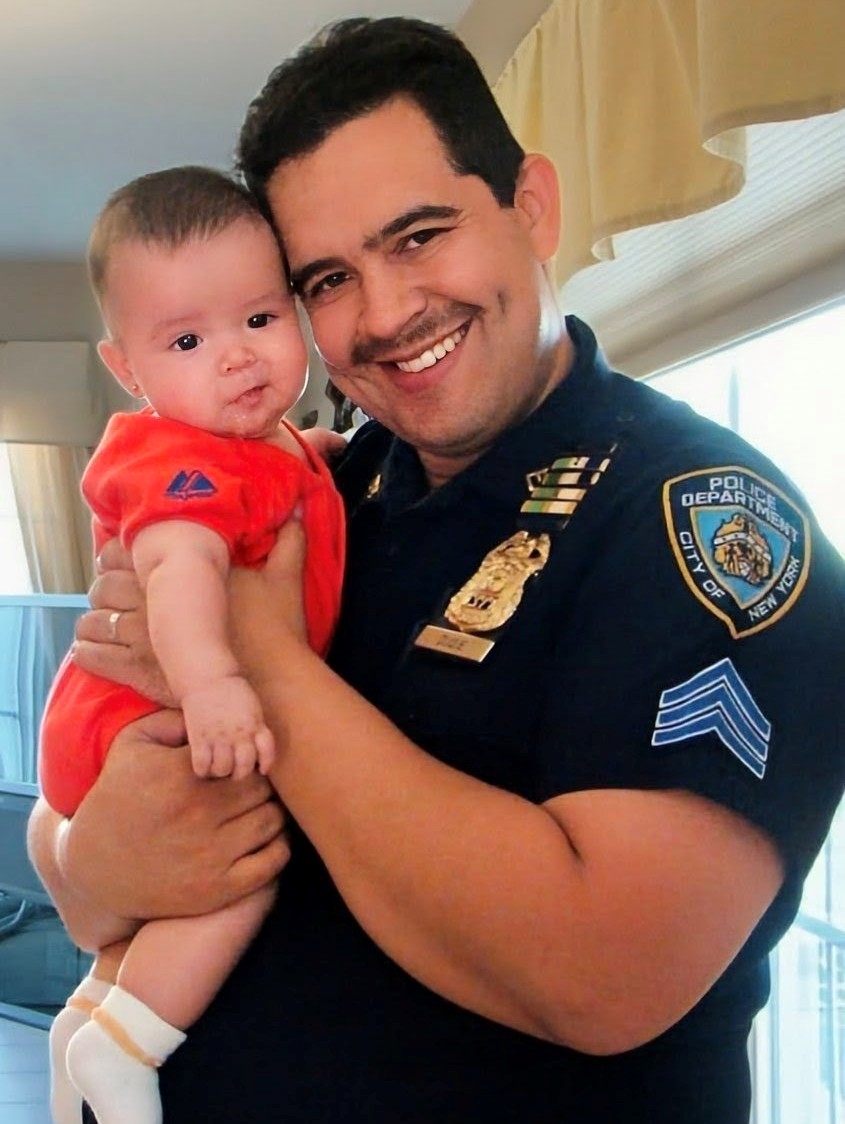 Although his job at the NYPD primarily focused on investigations, emergency response was always an inherent part of the work.
"Even though you’re in investigations, we’re always on call and had to suit up for emergencies,” he said. “We would stop our investigations and help with whatever crisis was at that moment, so you learn to multitask and pivot a lot.”
That ability to stay nimble has carried over into Professor Duque’s second act as a professor at Monroe, where he teaches courses on emergency management and counterterrorism. After initially teaching criminology, police science, and operations, he was invited to expand into emergency management instruction, a role that became even more personal after he moved to Florida, where hurricanes are commonplace.
In the classroom, Professor Duque draws on the same skills that guided him throughout his police career: preparedness, planning, communication, and adaptability. These traits form an essential, transferable skill set regardless of geography or career path, and he works to give students a strong foundation they can build on.
“It’s all about education, about preparedness, about planning, about information and awareness,” he said.
As emergency management is taught as an introductory course, Professor Duque focuses less on technical mastery and more on helping students become adaptable thinkers who can respond quickly and decisively in crisis.
“I just want to expose them to how expansive and how big the universe of emergency management is,” he said. “And then the second thing is not to be overwhelmed by the emergency itself.”
Monroe’s diverse student population plays an important role in shaping classroom discussions. Students bring lived experiences from different regions and disaster types, creating a rich environment where they can learn from one another.
“In term papers, I don’t assign an exact emergency,” Professor Duque said. “I let them pick one: hurricanes, tsunamis, earthquakes. Every student picks their own and adds their own unique twist to it.”
When discussing effective crisis response, Professor Duque points to an intangible constant -- one that continues to stand out to him.
“The one common denominator across all disasters is the human spirit,” he said. “The resiliency in people post-recovery, the good in people when they’re helping communities and each other recover. That becomes the secret sauce.”
At the heart of his work is a clear sense of purpose: helping prepare the next generation of emergency management professionals.
“It’s not a matter of ‘if’, it’s a matter of ‘when’,” he said. “Disasters, man-made or natural, are unfortunately more frequent and can happen anywhere. They are inevitable, and we need to have trained professionals to be able to respond and help others. So, being a part of helping shape future leaders is humbling and a privilege I never take for granted.”
Thank you, Professor Duque, for helping nurture our next generation of emergency first-responders!